
A diagnostic scan is the evidence layer around a tuning file. It shows what the vehicle was already reporting before the read, what changed after flashing, and whether the road test introduced a new warning that should be handled before the customer leaves.
Skipping the scan can make a workshop responsible for faults that already existed. Doing the scan properly makes the job cleaner, especially when the vehicle has emissions equipment, automatic gearbox strategies or a long service history.
Before the read: capture the starting point
The pre-read scan should be saved before the original file is modified. Even inactive codes matter because they may explain weak performance, limp history, sensor drift or aftertreatment behavior. A vehicle with boost, MAF, fuel pressure or temperature faults should not be treated like a healthy baseline. The scan tells the technician where caution is needed.
After flashing: separate file behavior from old faults
The post-flash scan has a different purpose. It confirms that communication, programming and the first drive did not introduce new faults. Some codes may be historic or unrelated, so the technician should clear only when appropriate and rescan after the road test. The important point is traceability: the workshop knows what was present before and what appeared after.
What to save in the job record
A useful job record includes the original scan, post-flash scan, original file, tuned file, ECU identity, voltage support note, road-test log and customer request. It does not need to be complicated. The record simply needs to make the next support conversation factual. Without it, every later issue becomes a debate about memory.
How scans support XRemover delivery
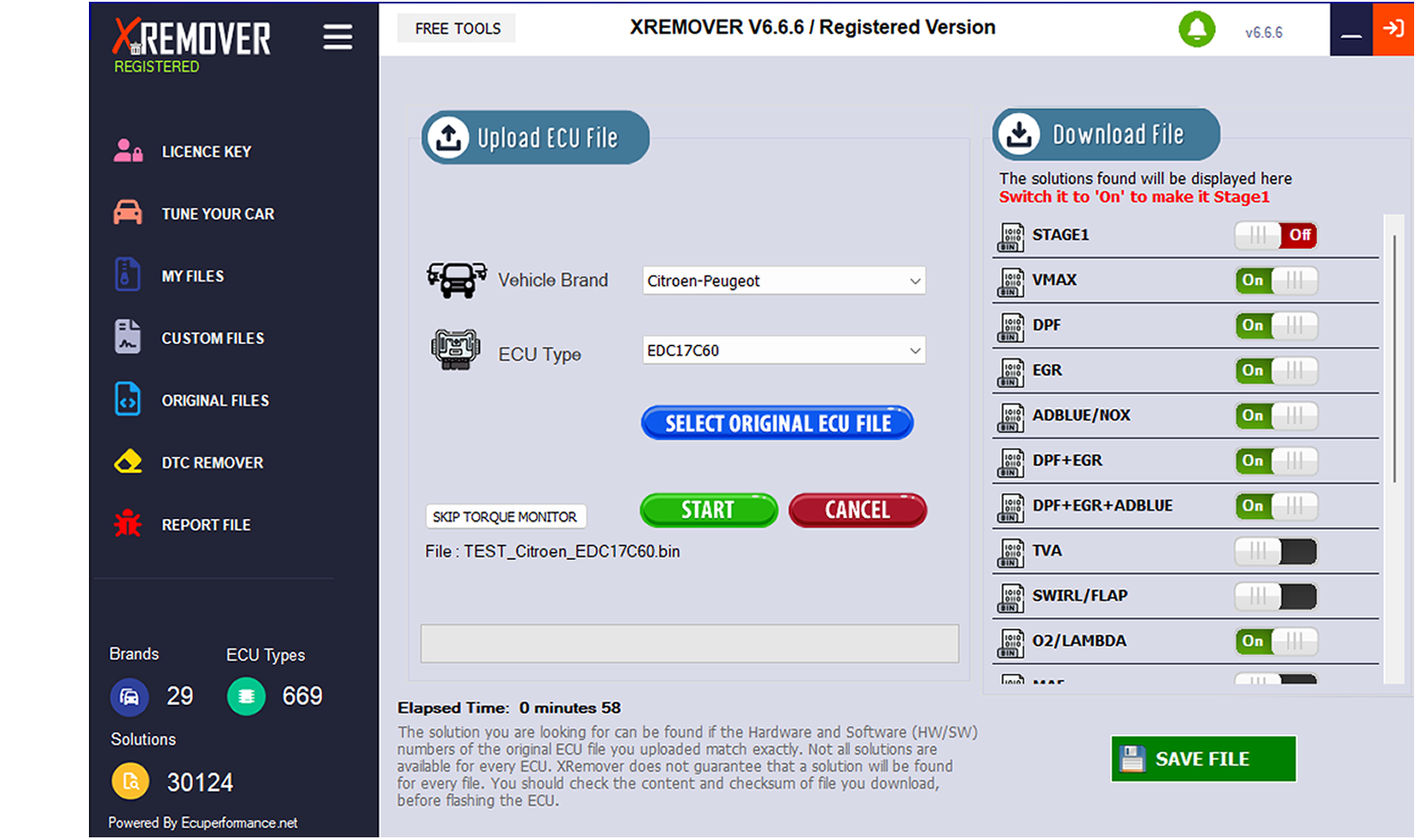
In an XRemover workflow, the scan sits beside the file process. Select the vehicle context, upload the original file, generate the required solution, download the result, flash safely and verify with diagnostics. The scan does not replace tuning knowledge; it makes the workflow accountable.
Customer confidence without overexplaining
Customers appreciate a clean explanation. Tell them the car was scanned before and after the work, and mention any maintenance issues separately from the tune. This protects trust. It also avoids the impression that every warning light after a tuning job must have been caused by the file.
The return-visit advantage
When the vehicle returns weeks later, the saved scan becomes valuable. The workshop can compare the new fault state with the old one and decide whether the issue is calibration-related, mechanical, service-related or unrelated. That is faster and more professional than starting from zero.
How diagnostic scan Fits Vehicle-Specific Stage Work
This concept should never be treated as a loose keyword that means the same thing on every vehicle. A BMW petrol saloon, a Volkswagen diesel SUV and a commercial van may all involve diagnostic scan, yet each job needs its own calibration decision. The useful approach is to keep the vehicle article close to the car, engine and ECU, while this reference page explains the technical idea in a stable and practical way.
A technician reading this page should be able to return to a customer job with clearer questions. Is the original file identified properly? Does the diagnostic state agree with the requested solution? Are the logs showing a real mechanical limit or a calibration choice? Has the customer use case been written down? Those questions keep diagnostic scan grounded in workshop practice rather than turning it into a generic phrase.
For handover, keep the language plain. Write down what was checked, what was changed, what was left stock, and what the customer should report if the vehicle behaves differently later. That short note turns diagnostic scan from an abstract tuning phrase into a service detail the workshop can support.
The best use of diagnostic scan is practical rather than decorative. It should help the technician decide whether to continue, revise, diagnose or reduce the target before delivery. When diagnostic scan appears in a vehicle-specific Stage 1 article, the reader should feel that it explains a real calibration choice, not that it was placed there for search engines only.
Workshop note: Treat scans as part of the product. The tuned file is easier to support when the diagnostic story is already written down.
This support article explains the "diagnostic scan" concept for professional ECU-file discussions. It is written as background reading for XRemover users and intentionally contains no rendered links.